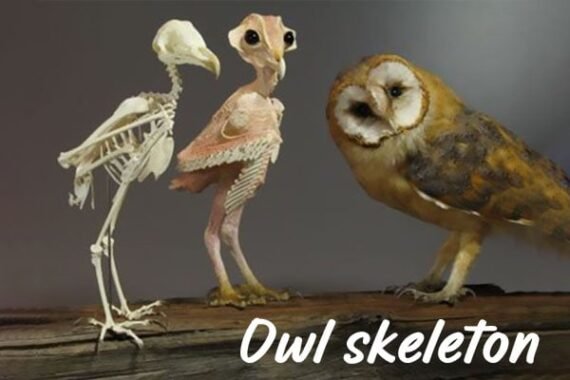
Imagine a shadow gliding silently through the night, a phantom of the forest whose very presence is marked by absence—no rustle of leaves, no snap of twigs, only the sudden, silent capture of its prey. This isn't magic; it's the masterful engineering of an owl, and at the heart of its predatory genius lies the remarkable Skeletal Structure of Owl Legs & Feet. Far from being mere appendages, these are highly specialized tools, concealed beneath dense plumage, that empower owls to hunt with unparalleled precision and power.
If you've ever watched an owl perch, then effortlessly snatch a mouse from the ground, you've witnessed a biomechanical marvel in action. Their legs and feet are a testament to evolutionary refinement, designed not just for flight, but for grasping, perching, pouncing, and even specialized locomotion unique to different species.
At a Glance: Owl Legs & Feet in a Nutshell
- Hidden Length: Owl legs are surprisingly long, camouflaged by thick feathers.
- Unique Bones: They feature a short femur, long tibiotarsus (shin), and tarsometatarsus leading to specialized toes.
- Zygodactyl Feet: Two toes face forward, two backward, for an incredibly strong, versatile grip; one toe can rotate.
- Lethal Talons: Sharp, curved, and powerful, designed to pierce and hold prey.
- Automatic Grip: A flexor tendon locking mechanism allows effortless, prolonged perching.
- Feathered for Function: Most species have feathered legs and toes for insulation, silent hunting, and camouflage.
- Cold-Proofed: Their lower legs can operate at near-freezing temperatures without damage, conserving energy.
- Species Diversity: Adaptations vary wildly, from long, slender legs for ground hunting to thick, unfeathered feet for fishing.
The Hidden Powerhouse: Unmasking Owl Leg Anatomy
When you look at an owl, you might think its legs are short and stubby, barely peeking out from beneath its voluminous feathers. The truth, however, is far more intricate and surprising. Owls possess unexpectedly long legs, ingeniously tucked away beneath their plumage. This dense feathering isn't just for insulation or camouflage; it also reduces sound during flight, allowing the owl to approach prey undetected.
So, what makes up this hidden powerhouse? Let's break down the skeletal structure of owl legs & feet:
- The Femur (Thigh Bone): This is the shortest segment of an owl's leg, largely internal and positioned high up near the body. It connects to the hip and then to what we typically perceive as the "shin."
- The Tibiotarsus (Shin Bone): This is the longest and strongest bone in the owl's lower leg, equivalent to our shin bone. Its length provides leverage and power for the owl's incredibly strong leg muscles.
- The Tarsometatarsus (Ankle-Foot Bone): This unique bone combines the fused elements of the ankle and foot. What many mistake for an owl's knee joint is actually this tarsometatarsus connecting to the tibiotarsus, effectively their ankle. The true knee is hidden high up, tucked against the body. This structure positions the foot and toes optimally for gripping.
These bones, while remarkably strong, are also lightweight, contributing to an owl's overall efficiency in flight. But the true magic happens at the very end of these long, muscular limbs: the feet and talons.
Zygodactyly: The Ultimate Grip
An owl's foot structure is known as zygodactyl, a specialized arrangement that sets them apart from many other birds. This means they have two toes pointing forward and two toes pointing backward. This configuration provides an incredibly secure grip, whether on a branch or a struggling animal.
What's even more fascinating is the flexibility of this design. Unlike some zygodactyl birds, most owls can rotate one of their rear toes forward, temporarily creating a three-forward, one-backward arrangement. This adaptability allows for:
- Superior Perching: A firm, balanced hold on branches of varying sizes and textures, preventing them from falling even when asleep.
- Unrivaled Prey Capture: The ability to encompass prey fully, ensuring a vice-like, inescapable grip from multiple angles. This is where their legendary grip strength comes into play.
Engineering for the Hunt: Talons, Grip, and The Silent Kill
The skeletal structure of owl legs & feet culminates in their formidable talons. These aren't just sharp nails; they are meticulously designed instruments of predation, backed by incredible muscular power.
Talons: Nature's Grappling Hooks
Owl talons are:
- Sharp: Razor-sharp points capable of piercing thick hide and muscle.
- Curved: The deep curvature acts like a grappling hook, sinking into prey and preventing escape.
- Powerful: Connected to incredibly strong flexor muscles in the leg, enabling them to exert immense force.
Once an owl's talons latch onto prey, escape is almost impossible. The sheer force they can apply is astonishing. Research indicates that some owl species can generate a grip strength of up to 500 pounds per square inch (PSI). To put that in perspective, a human bite averages around 160-200 PSI, and a Rottweiler's bite is about 328 PSI. An owl's talons, therefore, are like miniature, bone-piercing vises.
The Flexor Tendon Locking Mechanism: A Grip That Never Tires
Imagine holding onto a branch all night without your muscles cramping. Owls do this effortlessly, thanks to an ingenious anatomical feature: the flexor tendon locking mechanism.
Here's how it works:
When an owl bends its leg to perch, a specialized tendon in the leg automatically tightens around a rough surface on the bone, effectively locking the toes into a clenched position. This mechanism requires minimal muscular effort once engaged, allowing owls to perch for hours, even while sleeping, without expending significant energy or falling off their roost. This isn't just for perching; it ensures that once prey is caught, the grip remains steadfast, even if the owl is no longer actively contracting its muscles. This biomechanical marvel is a critical component of their hunting efficiency and survival strategy. You can learn more about leg owls and their incredible adaptations.
More Than Just Grip: Silent Flight & Sensing Prey
While this article focuses on the skeletal structure of owl legs & feet, it's crucial to understand how these tools integrate with the owl's other hunting adaptations. Silent flight, for instance, isn't just about wings. The soft, velvety plumage that often extends down their legs and toes contributes to sound reduction, ensuring their approach is utterly stealthy. This allows them to get close enough for their powerful talons to strike effectively.
Their exceptional binocular vision provides precise depth perception, while their asymmetrical ear openings and facial disc—a concave arrangement of feathers—funnel sound to their ears, allowing for pinpoint auditory localization of prey, even in complete darkness. All these senses direct the owl's body, culminating in the precise deployment of its formidable legs and feet for the kill.
Beyond Flight: Ground Movement & Climbing Skills
While owls are renowned for their aerial prowess, their powerful, muscular legs aren't solely for perching and striking prey from above. They also enable surprising dexterity on the ground and even in vertical environments.
Ground-Hugging Steps: Walking and Hopping
Most owls can walk and hop using their strong legs, though they typically do so in short, ground-hugging steps. This isn't their primary mode of locomotion, but it's essential for moving around nests, maneuvering on branches, or pursuing ground-dwelling prey that might escape a direct dive. For some species, like the Burrowing Owl, ground locomotion is a much more significant part of their daily life and hunting strategy.
Scaling New Heights: The Underrated Climbers
Owls also exhibit remarkable climbing abilities. Their sharp talons, combined with the flexible zygodactyl foot, allow them to scale vertical surfaces like tree trunks or rock faces. Some species even possess specialized "pectinate" claws—bristle-like feathers or serrations on the underside of their toes—which provide added grip, much like climbing spikes. This adaptation is especially useful for young owls learning to navigate their arboreal world and for adults needing to reach high perches or nest sites.
Feathers from Thigh to Toe: Insulation & Stealth
A striking feature of many owl species is the extensive feathering on their legs and feet, often making them appear plump and fluffy. This isn't just for aesthetics; it serves multiple vital purposes, directly supporting the function of their skeletal structure of owl legs & feet:
- Insulation: In cold climates, dense feathering provides critical warmth, preventing heat loss from these exposed limbs. Species like the Snowy Owl, which thrives in Arctic environments, are prime examples, with feathers covering even their individual toes.
- Sound Reduction: The soft, velvety texture of these feathers, similar to the specialized feathers on their wings, helps to muffle any sound produced by leg movement or contact during a swoop. This contributes to their famously silent flight, allowing them to remain undetected until the very moment of impact.
- Camouflage: Feathered legs and feet can help an owl blend seamlessly into its environment, whether it's the mottled bark of a tree or the snow-covered ground.
The density and extent of this feathering vary significantly between species, reflecting their specific habitats and hunting strategies.
A Tale of Adaptation: How Different Owls Use Their Legs
The fundamental skeletal structure of owl legs & feet provides a powerful foundation, but nature has fine-tuned these tools to suit the incredibly diverse lifestyles of the world's 250+ owl species. Here’s a look at some fascinating species-specific adaptations:
- Barn Owls (Tytonidae): Known for their ghostly appearance and silent flight, Barn Owls have remarkably long, slender, and lightly feathered legs. This anatomical design allows them to plunge deep into tall grasses to snatch rodents with surgical precision. Their toe rotation is exceptionally flexible, making them incredibly agile hunters in open fields. Relative to their body size, they possess some of the longest legs among all owls.
- Great Horned Owls: These powerful predators, often called "winged tigers," boast muscular, fully feathered legs. Their robust build supports an incredibly strong grip, allowing them to subdue prey as formidable as rabbits, skunks, and even other birds of prey. The thick feathering on their legs provides insulation and protection during struggles with powerful quarry.
- Snowy Owls: Residing in the harsh Arctic tundra, Snowy Owls are masterpieces of cold adaptation. Their legs and feet are perhaps the most densely feathered of all owls, often appearing like furry boots. This thick plumage provides unparalleled insulation against sub-zero temperatures. Their strong legs and massive talons are perfectly suited for grasping large prey such as Arctic hares and ptarmigans, often hunted by pouncing on them from a low hover or perch.
- Eurasian Eagle Owls: Among the largest and most powerful owls globally, Eurasian Eagle Owls possess exceptionally thick, muscular legs and truly enormous talons. These formidable limbs enable them to take down prey ranging from small mammals to fox-sized animals, making them apex predators in their ecosystems. Their leg strength is a critical factor in their ability to overpower and carry such heavy quarry.
- Burrowing Owls: A stark contrast to their arboreal cousins, Burrowing Owls spend much of their lives on the ground, inhabiting burrows dug by other animals. Consequently, they have proportionally the longest legs among all owl species, adapted for running and chasing insects and small rodents across open terrain. Their less dense leg feathering reflects their warmer, terrestrial habitats.
- Fish Owls (e.g., Blakiston's Fish Owl, Brown Fish Owl): These specialized fish-eaters break the common rule of feathered owl legs. Fish Owls have large, powerful, unfeathered toes with rough, spiky scales on the undersides. This adaptation provides a superior grip on slippery fish, preventing them from escaping. Their thick, muscular legs are also designed for standing in water for extended periods without getting their feathers waterlogged. This is a brilliant example of how the fundamental skeletal structure can be modified for highly specific ecological niches.
These diverse adaptations highlight the incredible versatility of the basic owl leg and foot plan, demonstrating how evolution sculpts structure for function across different environments and prey types.
Clever Physiology: The "Ankle Knee" & Frostbite Defense
The intricate skeletal structure of owl legs & feet holds several more physiological marvels that are often misunderstood or overlooked.
The "Knee" That Isn't
One of the most common misconceptions about owl anatomy relates to their legs. Many people observe an owl and assume the prominent joint halfway down its leg is its knee. In reality, what you're seeing is the owl's ankle joint. As mentioned earlier, the true knee (connecting the femur to the tibiotarsus) is hidden high up, tucked tightly against the owl's body, concealed by thick plumage. This unique arrangement positions the powerful lower leg and foot bones (tibiotarsus and tarsometatarsus) for maximum mechanical advantage during striking and perching.
Frostbite Defense: Nature's Anti-Freeze System
Owls, particularly those in cold climates, face a constant challenge: how to keep their extremities from freezing. Their lower legs and feet, even if feathered, are still highly exposed. Here's where their physiology steps in with a remarkable adaptation:
The design of an owl's leg, with muscle mass concentrated near the core, means that their lower legs and feet can cool to near-freezing temperatures without sustaining damage. This is partly due to a specialized circulatory system (rete mirabile) that allows for countercurrent heat exchange, warming arterial blood as it flows to the feet and cooling venous blood as it returns. This minimizes heat loss from the body core while allowing the extremities to function at very low temperatures. It's a natural anti-frostbite mechanism that conserves energy in frigid environments, ensuring their hunting tools remain functional regardless of the chill.
From Hatchling to Hunter: Development of Owl Legs
The development of the skeletal structure of owl legs & feet is a rapid and crucial process for young owls, or owlets. When an owlet first hatches, its legs, while functional, are still relatively soft and underdeveloped.
- Proportionally Large Feet: Owlets often appear to have disproportionately large feet and soft talons compared to their bodies. This is an adaptation for rapid growth, as these feet will soon become their primary tools for survival.
- Rapid Growth: The leg bones and muscles grow at an incredible rate, quickly developing the strength and structure needed for perching, walking within the nest, and eventually, for grasping prey.
- Talons Harden: The talons gradually harden and sharpen, transforming from relatively soft nubs into lethal instruments.
- Muscle Development: Through constant movement within the nest—stretching, flapping, and jostling with siblings—the leg muscles develop strength and coordination, preparing the owlet for its future as a skilled predator.
Parents play a vital role in this development, not only providing food but also teaching owlets essential survival skills, including how to properly use their powerful legs and feet to secure prey.
Perching, Landing, and Striking: Dynamic Leg Use
The skeletal structure of owl legs & feet isn't static; it's designed for dynamic, versatile movement, essential for an owl's every interaction with its environment.
The Art of the Landing
When an owl comes in for a landing, whether on a branch, a fence post, or the ground, you'll often see them dangle their legs directly beneath them. This isn't just for show; it's a calculated maneuver:
- Brake and Shock Absorber: Dangling the legs acts as a natural brake, increasing drag and slowing their descent. Upon impact, the powerful leg muscles and flexible joints absorb the shock, protecting their delicate body.
- Precise Placement: Having the feet extended allows for precise placement on a perch, ensuring a secure grip even on a narrow or unsteady surface.
Striking with Precision
During a hunt, the owl's legs become springs, propelling the talons forward and downward with incredible force. As they swoop down, the legs are extended, primed for impact. The precise judgment of distance, aided by their binocular vision, allows them to position their talons perfectly for the kill.
Balance and Cooling
Owls may also dangle their legs for other reasons:
- Balancing during turns: Extending legs can act as a counterbalance during sharp aerial maneuvers.
- Cooling off: In warmer temperatures, exposing the less-feathered parts of their legs can help dissipate excess body heat.
Every posture and movement of an owl's legs is a testament to their sophisticated design and the integral role they play in the bird's survival.
Threats & Our Role: Protecting These Winged Wonders
The exceptional skeletal structure of owl legs & feet, along with their other remarkable adaptations, has allowed owls to thrive in nearly every ecosystem on Earth. However, these incredible predators, and the delicate balance they help maintain, are increasingly threatened.
The Challenges Owls Face:
- Habitat Loss: Deforestation, urbanization, and the expansion of agriculture directly destroy the nesting and hunting grounds that owls rely on. Without suitable habitat, their ability to find food and raise young diminishes.
- Pesticide Use: Rodenticides, in particular, pose a severe threat. When owls consume rodents that have ingested these poisons, the toxins accumulate in the owls, leading to illness, reproductive failure, or death. This disrupts the natural predator-prey balance.
- Climate Change: Shifting weather patterns, extreme events, and changes in prey availability can severely impact owl populations, especially those adapted to specific climates like the Snowy Owl.
- Road Mortality: Owls often hunt along roadsides, making them vulnerable to vehicle collisions.
Our Collective Responsibility:
Conservation efforts are crucial to safeguarding these magnificent birds:
- Habitat Preservation and Restoration: Protecting existing forests, wetlands, and grasslands, and restoring degraded areas, provides owls with the necessary resources for survival.
- Sustainable Practices: Reducing pesticide use, especially rodenticides, can dramatically decrease secondary poisoning risks for owls and other wildlife.
- Public Education: Raising awareness about the ecological importance of owls, their unique adaptations, and the threats they face can foster greater appreciation and support for conservation initiatives. Owls are vital for controlling rodent populations, playing a key role in maintaining healthy ecosystems.
- Support Conservation Programs: Organizations dedicated to owl research, rehabilitation, and habitat protection rely on public support to continue their critical work.
By understanding and appreciating the intricate engineering behind the skeletal structure of owl legs & feet, and by recognizing the broader challenges these birds face, we can all contribute to ensuring that these silent hunters continue to grace our skies for generations to come. Their survival is not just about protecting one species; it's about preserving the intricate web of life that makes our planet so extraordinary.